Centerton City Council Recap: March 10, 2026
State of the City, trails, sidewalks, Greenhouse Road, downtown support, and the sewer capacity question still shaping growth
Some City Council meetings are mostly procedural.
This one had a little bit of everything.
A State of the City address. Trail easements. Sidewalk grants. Greenhouse Road funding. A deep discussion about bringing in outside expertise for downtown economic development and stormwater planning. A delayed solid waste contract. A quick trademark follow up. And, toward the end, another sewer capacity update that matters a lot for future housing supply.
If you live in Centerton, own a home here, or are watching our market closely, this meeting was worth paying attention to.
Here’s what happened and what it means for residential real estate.
Opening Business
The meeting opened with the pledge, prayer, and roll call.
Council members present included Cliff Thompson, Justin Cowgur, Wendy Henson, Josie Reed, and Joshua Hagan. Cody Miles was absent. Mayor Bill Edwards was present.
The February 10 City Council minutes were approved after a small correction was made related to names during the rules reading.
Council also acknowledged receipt of:
• Water and Sewer Commission minutes
• Planning Commission minutes from February 3 and February 17
Financial Report
The financial report was straightforward.
The city was 16.66% through the budget year, with expenses tracking very close at 16.81%.
Revenue appeared a little high, but the mayor clarified again that some of that is due to carryover from last year.
The street fund showed revenue at about 40% and expenses at about 11%, also partly due to carryover.
Council approved the financial report and the court report.
What this means for homeowners
Stable city finances matter.
They affect how well a city can maintain roads, pursue grants, fund public safety, and plan infrastructure without constantly turning back to residents for more money.
For a fast growing community like Centerton, financial discipline is part of the property value conversation.
Department Reports and Public Comment
Department reports were included, but there were no questions from council.
Public comment was opened, but no one came forward to speak.
The mayor did acknowledge that he received a questionnaire from Thomas and said he would take care of it.
State of the City Address
This was the biggest overview of the night.
Every year, the mayor is required to give a State of the City address within the first 90 days. This year’s address covered population growth, completed projects, infrastructure, grants, economic development, public safety, water and sewer, planning, and future priorities.
Population Growth
Mayor Edwards reported Centerton’s estimated population at 29,493, up from 27,821 in 2025.
That is about a 6% increase in one year.
He also noted that Centerton has grown significantly since the 2020 census population of 17,792 and now covers approximately 14.3 square miles.
What this means for real estate
Centerton is still growing quickly.
That growth supports demand for housing, but it also puts pressure on roads, utilities, parks, public safety, and schools. This is why infrastructure updates matter so much when we talk about future home values.
Completed Projects Highlighted
The mayor walked through several completed or near completed projects that directly affect quality of life.
Animal Shelter Remodel
The animal shelter remodel is complete.
Updates included:
• New office space
• A more public friendly lobby
• Air conditioning added to the kennel area
That last piece matters especially heading into summer.
Cornerwood Park
Cornerwood Park was completed with help from a $300,000 grant.
Improvements included:
• Updated playground equipment
• New restrooms
• BMX track
• Lighting improvements
• Designated fishing area
• Nearby pump track connected by trail
Kinyon Park
Kinyon Park also received upgrades, including:
• Additional shade structures
• Splash pad improvements
• Playground improvements
West Side Water Tower
A new three million gallon water tank or tower was constructed on the west side of town to improve service and reliability.
Fire Station 2
Fire Station 2 on Highway 72 has been converted into a fully manned station.
That should improve response times and service coverage.
What this means for residential real estate
Parks, public safety, and water reliability are not just city talking points.
They are part of what makes an area attractive to buyers.
Families look at parks.
Buyers care about response times.
Developers need water capacity.
Homeowners benefit when infrastructure keeps up with growth.
Major Infrastructure Projects
The State of the City address also covered several major projects underway or moving forward.
Highway 102
Construction from Main Street west to Highway 279 South has begun, with utility relocation underway and right of way and easements being obtained.
This has been a long anticipated project and should improve traffic flow and safety along one of Centerton’s busiest corridors.
Greenhouse Road
The Greenhouse Road project is moving forward in partnership with Bentonville.
The mayor described it as an approximately $40 million project that would include:
• Four lane roadway
• Turning lanes
• Roundabout at Greenhouse and Kimmel
• Traffic signal at 28th
• Traffic signal at Quail Ridge Way and Greenhouse
More on this came up later under the grant resolutions.
McKissic Trail
Phase 2 of the McKissic Trail along Allen Road will connect to Town View Road, where Bentonville will continue the trail connection.
The mayor said easements have been obtained and the project should go out for bid soon. The city has also secured a $500,000 grant to support construction.
Sidewalk Connectivity
The city is also working on a sidewalk connectivity project throughout town.
The goal is better walkability, safety, and neighborhood connection.
Southwest Road Paving Grant
The city is applying for a $400,000 state aid grant to pave roads in the southwest portion of the community.
What this means for residential real estate
This is one of the biggest takeaways.
Traffic, trails, sidewalks, and road conditions all affect where people want to live.
Better connectivity can strengthen neighborhood appeal.
Safer sidewalks help families.
Improved corridors help commute patterns.
Road upgrades can support long term buyer demand.
Grants and Fiscal Responsibility
Mayor Edwards emphasized that the city continues to pursue grants to reduce the burden on taxpayers.
He specifically mentioned grants for:
• Sidewalks
• Traffic signals
• Parking improvements
• Trail expansions
• Roadway projects
He also noted that many grant applications are written by city staff and the mayor, which saves administrative and consultant fees.
Impact fees were also discussed as a tool to help future growth pay toward infrastructure needs related to police, fire, streets, and parks.
Residential real estate takeaway
Growth costs money.
Impact fees and grants are two ways the city is trying to keep existing residents from carrying all of that burden.
That matters because infrastructure strain can eventually show up in taxes, utility costs, traffic, and neighborhood livability.
Economic Development
The mayor highlighted several businesses that opened in 2025, including:
• Centerpoint Laundry
• Splash Car Wash
• Center Plaza Tire
• Other new businesses
These businesses add services, jobs, and local economic activity.
What this means for homeowners
Centerton has often been described as a bedroom community.
More local businesses mean more convenience for residents and potentially stronger buyer appeal over time.
People like living near services.
Not every commercial project is a headline, but steady business growth helps a city mature.
Recreation and Community Facilities
Community Center
The community center project is still moving forward and is expected to come before City Council soon for final bid approval.
The planned facility is approximately 37,000 square feet and is expected to include:
• Pool
• Indoor walking track
• Workout area
• Meeting rooms
• Amenities for residents of multiple ages
Old City Hall
The rear portion of Old City Hall on Main Street has been remodeled for a senior citizens group and is also used for Coffee with the Mayor and community gatherings.
The front portion is planned for a sharing library and retail space, with the possibility of a coffee shop or similar shop to support downtown activity.
This came back up later in the meeting during other business.
What this means for real estate
Amenities sell communities.
A community center, better park access, gathering spaces, and downtown activity all add to Centerton’s residential appeal.
These are the kinds of quality of life improvements buyers notice.
Public Safety
The mayor reported that Centerton was named the fifth safest city in Arkansas for 2026 according to his State of the City address.
He also shared several public safety numbers:
• Police responded to 31,365 calls for service
• Code enforcement handled 464 cases
• Fire responded to 1,964 incidents
• EMS transported 930 patients
• Fire logged 23,229 training hours
He also noted that the fire department will take delivery of two new pumper trucks this year and that a ladder truck is expected to be ordered soon.
What this means for residential real estate
Public safety is one of the quiet pillars of property value.
Buyers may not always ask for call volume data, but they do care about safe neighborhoods, strong emergency response, and well equipped departments.
Building Safety and Development
The mayor reported that in 2025, the city issued 2,970 permits, completed 11,822 inspections, and collected over $1.1 million in permit fees.
He tied this directly to growth and the importance of making sure construction meets code.
Real estate takeaway
This matters for anyone buying new construction.
A fast growing market needs strong building oversight. Permits and inspections are part of protecting the quality of housing stock and the long term value of homes.
Water and Sewer
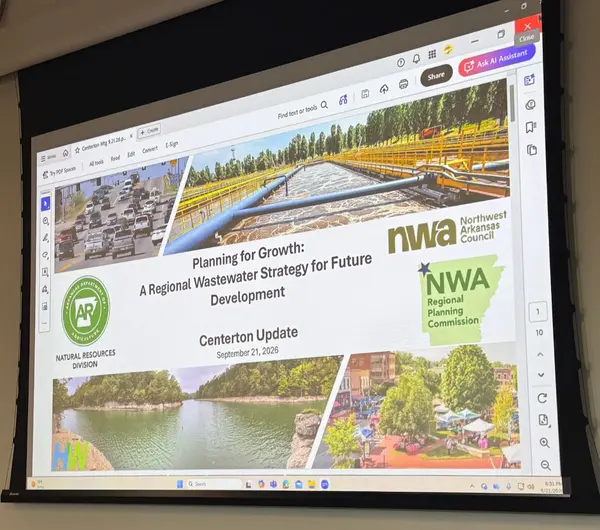
The State of the City address acknowledged the current sewer slowdown due to regional treatment capacity.
The mayor described it as a short term infrastructure challenge and said the city is working with regional partners and engineering teams to expand capacity.
This topic came back again at the end of the meeting with more detail.
Planning and Development
The mayor highlighted ongoing code updates, especially the comprehensive revision of Title 15, which governs subdivision and development regulations.
That connects directly to what we have been seeing at Planning Commission.
This is the city working through how growth should happen, what standards should apply, and how development should remain orderly.
Ordinances
Ordinance 2026-04
McKissic Trail Easements on Allen Road
Council approved an ordinance accepting multi use trail easements and granting an access easement for the McKissic Trail project along Allen Road.
The mayor explained that the city needed seven easements for the trail project.
A few were difficult to obtain, including one involving property owners in India, but the city was able to get everything completed without condemnation.
One property owner also donated land.
There was also a trade involving trail easement for an access easement so one property owner could access their backyard.
Outcome
Approved unanimously.
What this means for residential real estate
Trail connections matter.
They improve walkability, recreation, and regional connectivity. Over time, trail access can be a meaningful amenity for nearby neighborhoods.
Ordinance 2026-05
2025 Budget Cleanup
This was described as a cleanup ordinance for last year’s budget.
The mayor explained that the city does this once a year to adjust numbers and supplemental accounts after the money has already been spent.
Council approved the ordinance and the emergency clause.
Outcome
Approved unanimously.
What this means for residents
This was administrative, but still important.
It keeps the city’s financial records aligned and allows municipal obligations and essential services to continue without interruption.
Ordinance 2026-06
Solid Waste Contract
This item did not move forward.
The city previously selected Waste Management, but the contract was not ready for final approval.
The mayor explained that the city attorney and Waste Management were still working through contract language and that the city had only received the latest paperwork shortly before the meeting.
The contract is expected to come back later.
The mayor also made clear that trash service would continue through April 30 while the contract language is being finalized.
Outcome
Tabled.
What this means for homeowners
For now, trash service continues.
The city is being cautious before approving the final contract, which is what you want when it affects every household.
Resolutions
Resolution 2026-10
FUSE Corps Agreement for Two Fellowships
This was one of the most discussed items of the night.
The city considered an agreement with FUSE Corps for two positions:
• Economic development fellow
• Stormwater and floodplain fellow
FUSE is a nonprofit that helps local governments increase capacity by placing experienced professionals into specific project based roles.
The FUSE representative explained that these fellows typically have 15 to 25 years of experience and would work with the city for a 24 month period.
The city’s cost would be $10,000 per fellow per year, or $40,000 total over two years for both positions.
The rest of the cost is subsidized through philanthropic funding, including support connected to the Walton Foundation.
The discussion
Council asked several good questions.
They wanted to know:
• How FUSE started
• Where the funding comes from
• Whether the fellows would be local or connected to the region
• How hiring would work
• Whether the city would help choose the candidates
• Whether these would be more studies or actual implementation support
• How this fits with the downtown study already underway
• Whether Centerton would keep control of its own identity and priorities
The FUSE representative explained that the city would help select the fellows from finalist candidates and that the fellows would work like city staff while remaining FUSE employees.
The first 90 days would include listening and community engagement.
Council also discussed the timing with the downtown study. The downtown plan is expected before the fellows begin, so the economic development fellow could help move from planning into implementation.
Staff explained why the two roles matter.
Economic development fellow
This person could help take the downtown plan and support real implementation, including business recruitment, strategy, mixed use concepts, and possible economic development tools.
Stormwater and floodplain fellow
This person could help with floodplain compliance, drainage review, stormwater planning, FEMA related work, and regional detention needs.
Staff and engineering noted that the city already had money budgeted for part time engineering help, but this opportunity could bring more hours and more specialized experience for less cost than originally expected.
Outcome
Approved unanimously.
What this means for residential real estate
This could be a big deal.
If done well, it gives Centerton more staff capacity during a season when growth is stretching departments thin.
For homeowners, this touches several issues that affect daily life and property value:
• Downtown development
• Business recruitment
• Stormwater and drainage
• Floodplain planning
• Mixed use strategy
• Better implementation of existing studies
The biggest thing I heard was this:
Council does not want another plan that sits on a shelf.
They want help turning plans into action.
Resolution 2026-11
ARDOT Transportation Alternatives Program Grant for Sidewalks
Council approved applying for a Transportation Alternatives Program grant through ARDOT.
The city plans to apply for the maximum amount of $500,000.
The grant would require a 20% match, and the mayor stated that money is budgeted in the street department for sidewalk improvements.
Council asked what the grant could be used for and whether Main Street was included. The mayor said sidewalks qualify and that the sidewalk plan may include some Main Street areas, though the latest map was still being finalized.
The mayor also said the sidewalk map will be shared publicly once finalized.
Outcome
Approved unanimously.
Resolution 2026-12
Regional Trails Program Grant
Council also approved applying for a Regional Trails Program grant, also intended for sidewalks.
The mayor again said he plans to apply for the maximum $500,000.
Outcome
Approved unanimously.
What these sidewalk grants mean for residential real estate
Sidewalk connectivity is one of those improvements that sounds simple but affects a lot.
It helps:
• Kids walking to school or parks
• Neighborhood connection
• Safety
• Walkability
• Long term buyer appeal
For residential real estate, better sidewalk networks can make neighborhoods feel more complete.
Resolution 2026-13
Greenhouse Road Grant Partnership with Bentonville
This resolution approved partnering with Bentonville on a grant for Greenhouse Road.
Bentonville is taking the lead on the grant, and Centerton is participating as a co sponsor.
The grant request is a little over $9 million through the STBGP program. The mayor explained there is a 20% match, and Centerton would be responsible for 45% of that match, or approximately $900,000.
The project is tied to utility relocation and right of way work, with costs continuing to rise.
Council asked whether utilities would be buried.
City engineer Alan Craighead explained that there are many utilities in the corridor, including about 13 different utility lines. Some lines, including three phase power related to the substation near Kimmel and Greenhouse, would remain above ground because burying them would be complicated and impractical.
The gas line is buried.
Outcome
Approved unanimously.
What this means for real estate
Greenhouse Road is one of the major regional connection projects to watch.
Road improvements affect:
• Commute routes
• Access to Bentonville
• Development timing
• Commercial activity
• Buyer perception of west side growth
This is not just a road project. It is a growth corridor project.
Trademark Discussion
Council briefly followed up on whether the city should trademark the new Centerton logo.
The mayor said he contacted a trademark attorney, and the impression was that trademarking was not strongly recommended.
The main concern was that it would not cover what council originally hoped it might cover. It would mostly protect the city if another city tried to use the logo for similar purposes.
Council seemed satisfied that they had done their due diligence and did not move forward with trademarking.
Other Business
Employee Pay Adjustment for Ambulance Billing Support
The mayor brought up a pay adjustment for Crystal, a front desk employee who filled in during a 12 week finance department leave.
She had been receiving temporary duty pay, increasing her rate from $20.24 per hour, including bilingual pay, to $21.26 per hour.
The city is now transitioning ambulance billing services in house, and Crystal has taken on additional administrative responsibilities to support that work.
The mayor asked council to keep her at the $21.26 rate due to those added duties.
Council also acknowledged that bringing ambulance billing in house is significant and credited staff for the transition work.
Outcome
Approved unanimously.
Why this matters
This is not a flashy item, but it is the kind of operational decision that affects service quality.
Bringing billing in house may help with accuracy, customer service, and control of the process.
Old City Hall Retail Space Discussion
Council also discussed the future retail space in Old City Hall.
One council member raised a good question:
If there are already multiple coffee shop concepts being discussed near Main Street, should the city reconsider whether another coffee shop is the best use for the city owned space?
The mayor explained that the city is currently planning to white box the space. That means they would prepare the shell and basic infrastructure, but the future tenant would finish it out.
He also clarified that the city would have to put the space out through a request for proposals or qualifications, and that council would approve any final agreement.
The discussion broadened from “coffee shop” to potentially allowing a more flexible shop or vendor concept.
Ideas discussed included:
• Coffee
• Sandwiches
• Soda shop
• Gift shop
• Other small retail or food vendor use
The caution was that a true food vendor could trigger more expensive requirements like range hoods and other buildout needs.
Real estate takeaway
This is downtown activation in real time.
Even small decisions about what goes into Old City Hall matter because they shape how Main Street feels, how often residents gather there, and whether downtown becomes a destination.
Kinyon Sports Park and Recreation
Council briefly discussed Kinyon Sports Park opening soon and thanked Josh for stepping into Anthony’s role while Anthony is out.
There was also a question about staffing for mowing season and splash pad operations. Josh said they were in the process of hiring two temporary employees, with splash pad attendants also expected.
Council also asked about future travel ball tournaments at Kinyon.
Josh said the spring season may have growing pains, but they are looking toward the fall season for possible tournaments while still working with Little League.
The idea would be to preserve Little League use during the week while exploring tournaments on weekends.
What this means for homeowners
Parks and sports facilities are quality of life assets.
They support families, community gathering, and local activity. If tournaments grow in the future, that could also bring more visitors and business activity.
Donated Land Update
Council asked whether the city had received the deed for donated land that was discussed previously.
Staff said they are working on it and catching up due to everything happening in the department.
Sewer Capacity Update
This was one of the most important conversations at the end of the meeting.
Council asked for an update on sewer availability and the related legal or appeal issues.
The mayor said there had been an administrative hearing with an administrative law judge related to ADQ. The recommendation was to dismiss the issue, but it still needed to go before the ADQ meeting at the end of the month. The mayor also mentioned attending a regional sewer related listening session with multiple cities, ADH, and ADQ.
He said ADH and ADQ were also recommending dismissal.
The mayor planned to watch the meeting online rather than travel to Little Rock.
Capacity still limited
The city still has a sewer capacity issue.
The mayor said there is a waiting list of 19 projects ready or nearly ready, but expected available capacity would only be enough for 12 of them.
Some projects are in Centerton and some are in Bentonville. These projects have been through Planning Commission but still need ADH approval for final plat.
Some also still have ADH comments to address.
The phasing idea
Council discussed whether capacity could be divided among all 19 projects so everyone could get something started rather than only 12 moving ahead.
That would potentially allow developers to phase projects and begin moving forward while waiting for more capacity later.
The mayor said he would pass that idea to the Water and Sewer Commission for discussion.
What this means for residential real estate
This is one of the biggest market issues in Centerton right now.
Sewer capacity affects:
• Which subdivisions can move forward
• How quickly new lots become available
• Builder timelines
• New construction inventory
• Pricing pressure
• Future residential supply
If capacity only opens for part of the list, some projects may still sit. If capacity can be shared or phased, more projects may be able to start moving.
Either way, sewer capacity is still one of the biggest behind the scenes forces shaping Centerton housing.
My Takeaways for Centerton Homeowners
This meeting had several major themes.
1. Centerton is still financially stable, but growth is expensive
The city is leaning heavily on grants, impact fees, and careful budgeting to keep up with infrastructure needs.
2. Trails and sidewalks are becoming a bigger priority
McKissic Trail, sidewalk grants, and regional trail funding all point toward better connectivity.
That matters for neighborhood livability.
3. Downtown planning is moving from ideas toward implementation
The FUSE fellowship discussion showed that the city is thinking about who will actually carry out the downtown vision once the study is complete.
4. Stormwater and floodplain planning are becoming more important
As more land develops, drainage and floodplain work cannot stay on the back burner.
That is a residential issue, especially for buyers evaluating lots, neighborhoods, and long term risk.
5. Sewer capacity is still the quiet driver of the housing market
Even when it is not the main agenda item, sewer capacity continues to affect what can be built, when it can be built, and how much inventory buyers may have.
What This Means for Residential Real Estate
If you own a home in Centerton, meetings like this matter because they shape the environment around your property.
Not just what is for sale today.
But what is coming next.
Roads. Sidewalks. Trails. Parks. Downtown retail. Sewer capacity. Stormwater planning. Public safety. These are all pieces of the same bigger real estate puzzle.
They influence:
• Buyer demand
• Neighborhood appeal
• Future inventory
• Property values
• Commute patterns
• Quality of life
This is why I keep watching these meetings and breaking them down.
Real estate is not just listing prices and square footage.
It is also infrastructure, planning, timing, and knowing what conversations are happening before the market fully reacts.
Let’s Talk Strategy
If you are thinking about buying or selling in Centerton, or if you want to understand how nearby growth and infrastructure decisions could affect your home’s value or future plans, let’s talk.
I follow the details so you do not have to.
Allie Verdery, The Blue Haired Broker
Centerton Luxury Real Estate Advisor
Engel & Völkers Bentonville
314.517.3196
allie.verdery@evrealestate.com
thebluehairedbroker.com
Bookmark the blog and check back after the next meeting. I’ll keep translating City Council into real world real estate context.
Categories
Recent Posts