Centerton City Council Recap: October 13, 2026
Centerton City Council met Tuesday, October 13, 2026, with a full agenda covering infrastructure, annexations, the old City Hall renovation, ambulance billing, and city finances. Several items that initially appeared routine led to much larger discussions about how the city plans for growth, manages taxpayer dollars, and balances current projects with future needs.
The meeting also included updates on the city's water and sewer systems, questions about public access to government meetings, and a detailed presentation on a possible police motorcycle unit. Some items were approved, while others were tabled for additional review.
Water Tower and Sewer Capacity Updates
TJ Wells, a board member of the Centerton Water and Sewer Commission, provided updates on two major infrastructure priorities.
First, the city's new water tower was still not operational. Staff continued working with the contractor toward substantial completion, and a certified letter had been sent addressing liquidated damages related to the project. Wells emphasized that getting the tower operational remained one of the department's highest priorities.
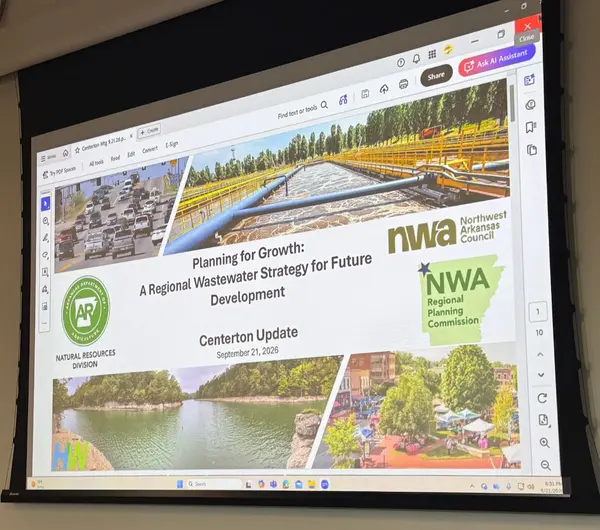
On the sewer side, Wells reported that the Water and Sewer Commission had adopted a resolution authorizing a formal request to the Northwest Arkansas Conservation Authority (NACA) for an initial 0.25 million gallons per day (MGD) of wastewater treatment capacity.
Wells clarified that this was an initial request, not necessarily the maximum amount Centerton would seek in the future. The engineering plans for the proposed connection were described as capable of handling more than ten times the initially requested capacity, allowing for potential expansion.
The resolution did not commit city funds or establish a final service agreement. NACA was still reviewing its bylaws, existing contracts, and user agreements, a process expected to take approximately 12 months. Making the request now would allow Centerton's anticipated needs to be included in NACA's ongoing master planning.
There was also a question about the timeline for Benton and Washington County water distribution improvements. Wells did not have a formal timeline to share, although he acknowledged construction challenges and agreed that updates could be communicated more consistently.
Public Comment and Government Transparency
During public comment, resident Chris Mooney raised concerns about the availability of Water and Sewer Commission meeting records and the lack of livestreamed meetings. He noted that minutes and resolutions from recent meetings were not yet available online and encouraged the City Council to establish a timeline for the commission to begin broadcasting its meetings.
A council member responded that the issue had already been discussed with TJ Wells and that work toward broadcasting meetings was underway, although no implementation date had been established. No formal action was taken on the request.
Mooney also shared that a NACA representative had told him the authority was nearing completion of a project to double its treatment capacity, which he viewed as encouraging news for Centerton's sewer planning.
Resident Thomas C. Loucks spoke about public service and recognized Mayor Bill Edwards for his 16 years of service to Centerton, along with his military service. He encouraged residents to attend the upcoming Coffee with the Mayor event.
Another resident asked whether the city's downtown public-space planning would prioritize amenities such as shade structures and accessible play areas.
Annexations and Electrical Code Updates
The Council addressed three ordinances.
Ordinance 2026-29 received its final reading and was approved. It involved the annexation of nine properties near Shady Acres Road into Centerton.
Ordinance 2026-34 received its first reading. This proposed annexation involved property along Highway 72 near Harbaugh Road, across from Walmart-owned property. The mayor described it as a 100% property-owner annexation. No final action was taken because it was only the first reading.
Ordinance 2026-36 addressed amendments to Section 11.12 of the Centerton Code to reflect the newly adopted 2026 National Electrical Code. The city also included a local prohibition on 10-amp branch circuits in residential dwelling units.
Staff explained that the state had adopted the updated electrical code on September 5 and that municipalities had 90 days to make the necessary changes. The local prohibition was intended to establish a stricter safety requirement than the newly adopted minimum code.
The Council voted to suspend the usual requirement for three separate readings and then approved the ordinance.
Property Tax Millage for 2027
Resolution 2026-31 established the city's property tax millage rates for taxes collected in 2027.
Mayor Edwards explained that this was an annual requirement allowing the county to collect and distribute property taxes on behalf of the city. He also confirmed that the rates remained unchanged from the previous year.
The Council approved the resolution. No millage increase was proposed during this discussion.
Recycling Education Grant Tabled
Resolution 2026-32 proposed accepting a grant for a recycling education campaign in partnership with the Northwest Arkansas Council.
The project was described as a series of four postcards mailed to Centerton residents with information about proper recycling practices. The mailers would also promote the My Centerton app through a QR code and additional information.
Although the project was initially presented as fully grant-funded, council members raised questions about the financial and administrative responsibilities outlined in the agreement.
The discussion focused on whether the city would need to pay project expenses upfront before receiving reimbursement, which expenses qualified for reimbursement, and whether any costs could fall outside the grant's coverage. Members also asked who would oversee the program, maintain required records, and fulfill reporting obligations after the current administration's term ended.
The agreement referenced cash grant funding as well as additional educational and technical assistance services, but members wanted a clearer understanding of how the funding and reimbursement process would work.
The Council voted to table the resolution until a grant representative could provide additional information.
Electrical Easement and Highway 102 Water Line Relocation
Resolution 2026-33 involved a proposed easement for Carroll Electric. The city requested additional time to review questions about the easement, including whether the electric utility and water department could share the space or needed separate dedicated easements.
The Council tabled the resolution for further review.
A separate item, Resolution 2026-37, addressed utility access on city-owned property near the fire station as part of the Highway 102 expansion and water line relocation project.
The city attorney explained that granting a conventional easement to itself would create a legal problem because the city already owned the property. Instead, the revised resolution documented the municipal utility corridor and provided for an appropriate easement if the property were transferred in the future.
The Council approved Resolution 2026-37, allowing the documentation needed for the relocation project to move forward.
Old City Hall Renovation Sparks Extended Discussion
One of the longest discussions of the evening involved Resolution 2026-34, which proposed dividing the previously approved renovation of the old City Hall building at 290 North Main Street into two separate construction contracts.
The project had already been designed, bid, and approved, but permitting had raised an issue because the building was located within a regulated floodplain.
Staff explained that the building's appraised value was approximately $700,000, creating a $350,000 threshold under the applicable substantial-improvement requirements. Exceeding that threshold in a single project would require more extensive floodplain compliance measures, such as raising or floodproofing the building.
The previously approved construction project totaled approximately $410,000, including contingency and alternative items. Staff proposed separating the project into two distinct phases to comply with the floodplain requirements without increasing the total authorized project cost.
What began as a discussion about contract structure expanded into broader questions about the renovation itself.
Council members discussed parking limitations along Main Street, pedestrian safety, the nearby ice cream shop, and the possibility of additional businesses increasing traffic in the area. There were concerns about whether the existing downtown infrastructure could accommodate more visitors and how the renovation fit into the city's longer-term downtown development plans.
The building's intended uses were also revisited. Previous plans included library space, a potential coffee shop or other leased commercial space, and a dedicated area for seniors. Some members questioned whether those plans should be reconsidered as other downtown developments moved forward.
The discussion also touched on the city's financial investment. The project had received a $250,000 grant from the Walton Family Foundation, with additional city funds committed. Staff explained that delaying or significantly changing the project could require new design work and rebidding, potentially increasing construction costs.
Other members raised concerns about the consequences of abandoning a previously approved grant-funded project, including possible effects on the city's ability to secure competitive grant funding in the future.
During additional public comment, Thomas C. Loucks questioned whether using public funds to renovate commercial lease space could create an unfair advantage over privately funded businesses. Mayor Edwards responded that any commercial space would be leased at fair market value and that the final tenant had not yet been determined.
Council members also discussed whether postponing action would allow time to review the existing contract, potential cancellation penalties, and outstanding questions about the project.
Ultimately, the Council approved Resolution 2026-34 by a 5-1 vote, with Joshua Hagen voting against it. Approval was contingent upon review of the revised contracts by the city attorney.
The resolution authorized dividing the existing project into two contracts. It did not increase the total project authorization or establish a final commercial tenant for the building.
Ambulance Billing to Move In-House
The Council also discussed a significant operational change for the Centerton Fire Department: bringing ambulance billing in-house rather than continuing to rely entirely on a third-party billing company.
Fire department representatives explained that the proposal was driven by both financial concerns and complaints from residents about their experiences with the outside billing provider.
According to the presentation, the billing company collected approximately 54.7% of the amounts submitted to it and charged the city 6.8% of the amounts collected.
The department reported approximately $146,826 in uncollected amounts over the preceding 12 months and approximately $328,846 in outstanding amounts overall, based on the figures available at the time. Officials acknowledged that some of the reporting data lagged by several months.
Moving billing operations in-house was presented as an opportunity to improve collections while giving residents better access to local staff when they had questions, needed help with billing, or wanted to discuss payment arrangements.
The department reported that the estimated initial additional cost was approximately $12,188, largely because an existing employee would take on billing responsibilities. Staff had completed certification and software preparation, with a clearinghouse arrangement and updated ambulance billing rates still needing to be finalized.
The Council approved the request for a Fire Administration Manager position at $26.24 per hour.
Separately, Resolution 2026-35 authorized the City of Centerton to conduct business under the name Centerton Fire Department. Staff explained that the designation was necessary for ambulance-related reimbursement and Medicaid administrative requirements.
That resolution was approved.
Certification Pay Policy and City Credit Rating
The Council approved a change to the city's certification pay policy requiring department-head approval for additional certification pay.
The change was intended to give department heads more oversight of certification-related expenses and improve budget planning.
Mayor Edwards also presented the city's credit rating information associated with recent water and sewer bonds. He described the rating as favorable, and the Council voted to acknowledge receipt of the report.
Copier Lease Tabled for Competitive Review
Resolution 2026-36 involved renewing copier leases for several city departments and adding a copier at Animal Services.
During the discussion, council members asked whether competing vendors had been considered before bringing the proposed contract forward. Staff confirmed that no additional companies had been contacted.
With the proposed agreement representing a multi-year financial commitment, members requested additional pricing options before making a decision.
The Council voted to table the resolution.
Public Works Equipment and A&P Commission Appointment
The Council approved declaring four aging pieces of Public Works mowing equipment surplus. Staff explained that the equipment was no longer operational and had already been used for replacement parts to keep other machines running.
The Council also approved an appointment to the Advertising and Promotion Commission. The new member, identified during the meeting as Kara from The Ravington, would serve a four-year term expiring October 13, 2030.
Police Motorcycle Unit Proposal Raises Budget Questions
Under other business, the Centerton Police Department returned with additional information about establishing a motorcycle unit as part of its traffic enforcement efforts.
The presentation included officers with motorcycle patrol experience, including an instructor and a former New York City motorcycle officer. They discussed training requirements, safety considerations, equipment costs, and how motorcycles could support traffic enforcement in a growing city.
The department emphasized that traffic-related complaints and requests for additional patrols were among its most common concerns from residents. A dedicated traffic enforcement unit could help address speeding and other traffic issues while offering greater mobility in congested areas.
The proposed motorcycle training program included an initial course of approximately 80 hours, with additional preparation and evaluations bringing the total commitment closer to 100 to 115 hours. Officers would also be required to complete ongoing monthly training to maintain proficiency.
Several council members raised safety questions, including whether the accident and fatality statistics presented accurately reflected the risks of motorcycle patrols compared with traditional police vehicles. Members requested more context about the number of motorcycles in service nationwide rather than comparing raw incident totals.
Cost was another major consideration. The proposal involved leasing two motorcycles for approximately $700 to $800 per month each over four years, with no residual ownership value at the end of the lease. Department representatives suggested that motorcycles could be less expensive than traditional patrol vehicles while providing some operational advantages.
However, the discussion became more complicated when questions arose about whether the proposed expenses had been incorporated into the city's 2027 budget.
Centerton Finance Director Shannon Zappettini explained that the upcoming budget was already extremely tight and that departments had been asked to maintain or reduce expenses wherever possible. She clarified that while vehicle leases had been discussed, she had not specifically reviewed the motorcycle proposal with the police department.
The conversation expanded into the city's broader financial position, particularly the decline in building permit revenue. Staff discussed how increased revenue in other areas had partially offset those losses, but not enough to eliminate concerns about the coming year.
Zappettini emphasized her responsibility to protect the city's financial stability, noting that difficult spending decisions were necessary across departments. She also explained that building permit revenue should not be relied upon to subsidize ongoing departmental operations.
Council members acknowledged the need for additional traffic enforcement but wanted a clearer understanding of the financial impact before committing to the proposal.
No motorcycles were approved during the meeting. The discussion was deferred to the upcoming budget work session, with additional information about insurance costs also expected.
2027 Budget and Community Center Planning
As the meeting concluded, Mayor Edwards discussed preparations for the city's 2027 budget.
Department heads and Finance Director Shannon Zappettini had been working together to develop the proposed budget, with the mayor explaining that departments had adjusted their requests to account for anticipated financial constraints.
The proposal included potential merit-based employee raises of up to 4%, although those increases had not yet been approved. Mayor Edwards indicated that the goal was to review the raises during the budget process, consider approval in November, and have any approved increases take effect in January 2027.
The budget discussion also included anticipated operating expenses for the new community center. The mayor suggested including approximately $150,000 in projected revenue and an equivalent amount in expenses as placeholders until the facility's opening date and operating needs became clearer.
He cautioned that the community center might not open until early 2028 because of the sewer connection timeline, although the possibility of opening sooner had not been entirely ruled out.
The Council's budget work session was scheduled for October 27 at 6 p.m. at the old City Hall, 290 North Main Street. The city planned to use the regular Council meeting location for voting beginning October 19.
The goal was to continue reviewing the proposed budget during the fall, with final adoption anticipated in December.
Upcoming Community Events
The final Coffee with the Mayor event of the year was scheduled for Saturday, October 17, at 9 a.m. at the Community Building, 290 North Main Street.
The event was expected to include updates from city departments, information about Issue 3 on the November ballot, participation from local businesses, and recognition of Mayor Bill Edwards' service.
My Takeaway
This meeting was a good example of how an agenda item can open the door to a much larger conversation about the city's priorities.
The old City Hall renovation was a particularly interesting discussion because it involved more than simply splitting a construction contract. It brought up questions about parking, walkability, existing commitments, the purpose of publicly owned property, and how today's decisions fit into the future of downtown Centerton.
I also appreciated the questions raised about the recycling grant and copier leases. Even when something appears to be fully funded or routine, it's important to understand the terms, responsibilities, and financial commitments before moving forward.
The conversation about police motorcycles highlighted another challenge the city will continue to face. There are valid reasons to consider additional services and equipment, especially as Centerton grows. At the same time, those requests have to be weighed against the city's overall financial position, not just what an individual department may have available in its budget.
With sewer capacity affecting development, building permit revenue below expectations, and major projects still in progress, the upcoming budget discussions will be especially important. The decisions being made now will have an impact beyond the next fiscal year.
As always, I'll continue sharing these recaps to help make the discussions and decisions shaping Centerton easier to follow.
Categories
Recent Posts